
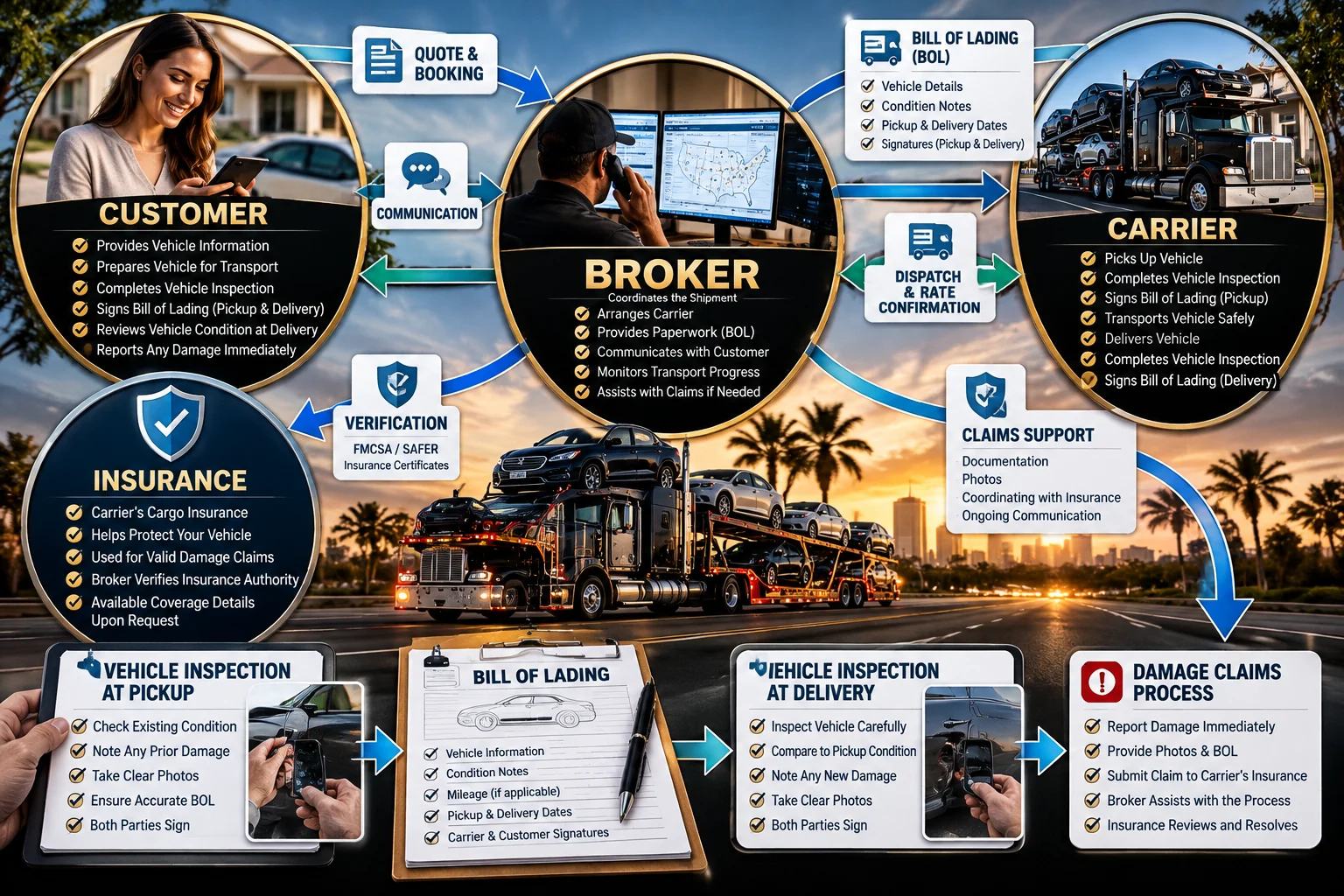
Auto transport is easier to use when the customer understands what is happening behind the scenes. This guide explains the practical issues that can affect a real shipment without pretending every route, carrier or vehicle is identical.
The Bill of Lading is more than a receipt
In auto transport, the Bill of Lading commonly documents shipment details and vehicle condition at pickup and delivery. Read it rather than treating it as a formality.
Photographs strengthen the condition record
Take clear pictures before loading: all sides, bumpers, wheels, roof where practical and any existing damage. Repeat the process at delivery. Keep the original files rather than relying only on compressed social-media copies.
Inspect before signing at delivery
Walk around the vehicle in good light when possible. Compare the condition with the pickup record. If you observe new damage, document it on the delivery paperwork before signing and photograph it immediately.
Report concerns promptly
Notify the broker and carrier promptly and follow the claim instructions associated with the shipment. Preserve the Bill of Lading, photographs, repair estimates and communications.
Insurance is not one generic promise
Coverage depends on the actual carrier policy, the facts of the incident and policy terms. A broker can help obtain and review carrier information, but customers should not assume every type of loss or personal item is automatically covered.
Documentation protects both sides
A careful inspection can show that damage existed before pickup just as clearly as it can show new damage. Good documentation is not adversarial; it is how customers and professional carriers avoid arguments based on memory.
Verification note: Federal registration, licensing, insurance and safety information can change. For current carrier or broker information, use official FMCSA resources and verify the company you are actually dealing with.
Do not turn a disagreement into an argument at the truck. Document the condition, note the specific exception on the delivery paperwork, take photographs and preserve the bill of lading and communications. A broker can help coordinate information, but a cargo claim ultimately depends on the facts, the carrier involved, the applicable coverage and the documentation. Prompt, specific records are much more useful than a general complaint made days later.
If something is different at delivery
The pickup inspection should describe the vehicle as it actually appears before it moves. Walk around the vehicle in good light when practical, photograph all four sides and pay attention to wheels, glass, bumpers, lower body panels and any existing scratches or dents. At delivery, compare the vehicle with the pickup record before signing a clean delivery receipt. Dirt, rain or darkness can make inspection harder, which is exactly why clear pickup photographs are useful.
Treat the inspection as evidence, not paperwork
Continue learning: Return to the Gold Coast Knowledge Center →
Need an exact transport quote? Pricing depends on the live route, vehicle, timing and carrier market. Request a quote.