
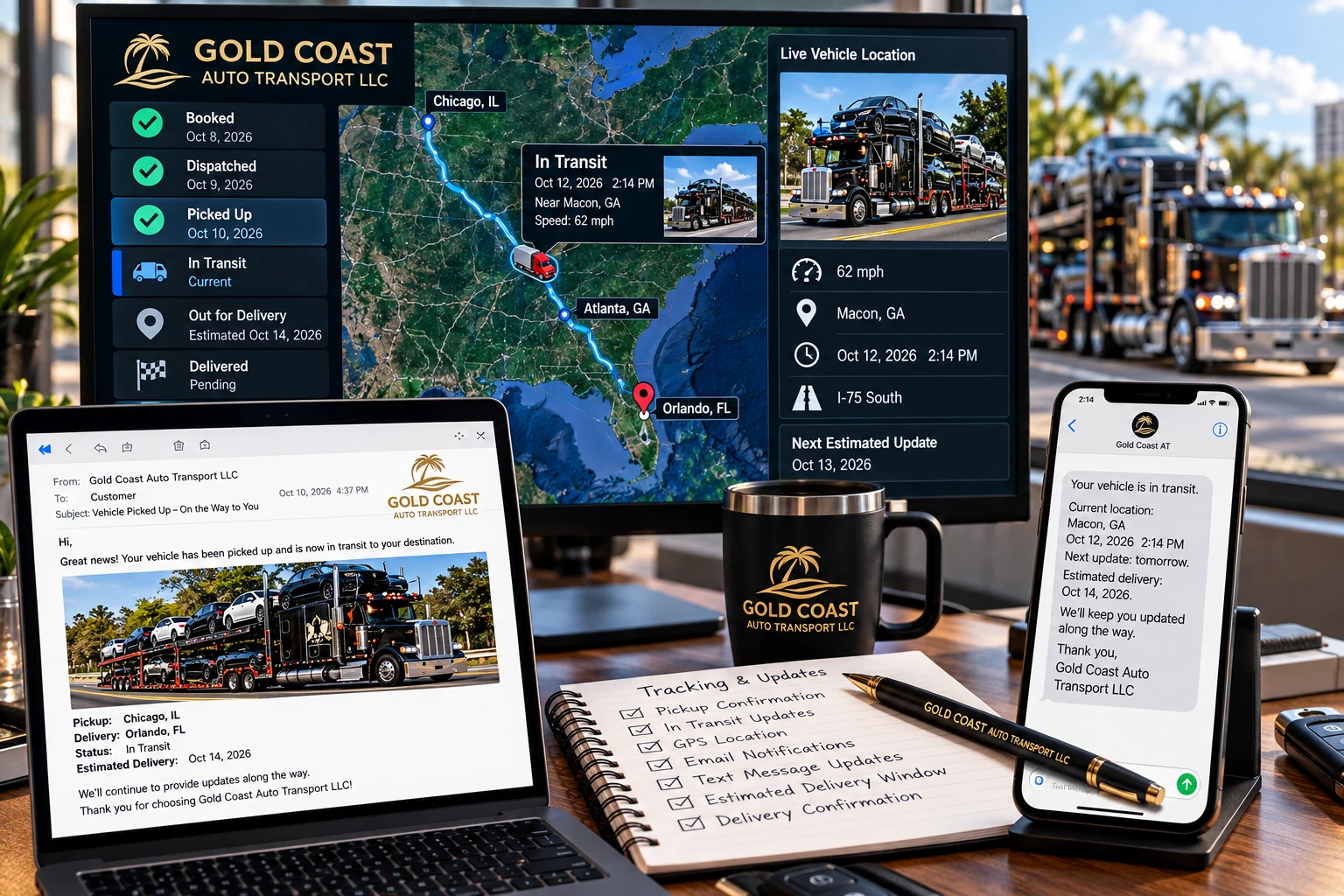
How brokers and carriers provide vehicle-shipping updates using driver communication, GPS-enabled tools, eBOL systems and milestone reporting. The goal is to explain what matters operationally so customers can make better-informed decisions without turning a real shipment into a generic checklist.
Auto transport tracking is not always a moving dot on a map
Some carriers and transportation platforms provide GPS-enabled status tools, while others communicate through dispatch systems, driver calls, texts or milestone updates. The important question is what status information will actually be available for your shipment.
The driver is still the primary source of operational truth
A truck’s real schedule depends on loading, traffic, weather, prior customers and safe stopping points. Software can display data, but the driver knows whether a pickup ran long, a delivery location is inaccessible or a mechanical issue changed the plan.
Electronic Bills of Lading improve document visibility
Many carriers use electronic inspection and BOL tools that capture condition records, signatures and photographs. These systems can make pickup and delivery documentation easier to share, but customers should still review the inspection rather than treating the technology itself as proof that every detail is correct.
Useful updates focus on meaningful changes
A good update tells the customer what changed, where the shipment stands and what the next realistic expectation is. Repeating an old ETA after circumstances have changed is less useful than acknowledging uncertainty and providing the best current information.
Ask how communication will work before pickup
Know whether updates will come from the broker, carrier, driver or an app. Make sure the pickup and delivery contacts have working phone numbers and can receive calls or texts while the truck is approaching.
Protect driver safety
Drivers should not be expected to provide constant updates while driving. Communication is most useful when it is coordinated safely through stops, dispatch systems or the broker.
Practical takeaway: Gold Coast Auto Transport LLC is an FMCSA-authorized property broker. Carrier availability, equipment, policies and live market conditions vary by shipment, so current details should be confirmed before dispatch.
Even precise truck location does not account for remaining stops, loading time, legal driving hours, traffic or a change in route order. Useful tracking combines location with context: where the carrier is, what remains on the route and whether the delivery estimate has changed. That is more informative than repeatedly refreshing a map without understanding the driver’s remaining work.
A location dot is not the same as an arrival promise
Some carriers use GPS-enabled dispatch systems or driver apps, while others provide location updates through dispatch or direct driver communication. A customer should not assume every truck offers a consumer-facing live map. What matters is having a reliable method to obtain meaningful progress updates and knowing who to contact if the expected delivery window changes.
Tracking may be a communication process rather than a map
Related guides: How transport works • BOL and inspections • Why dates change
Continue learning: Return to the Gold Coast Knowledge Center →
Need a transport quote? A useful quote starts with the actual route, vehicle, condition and timing. Request a quote.