
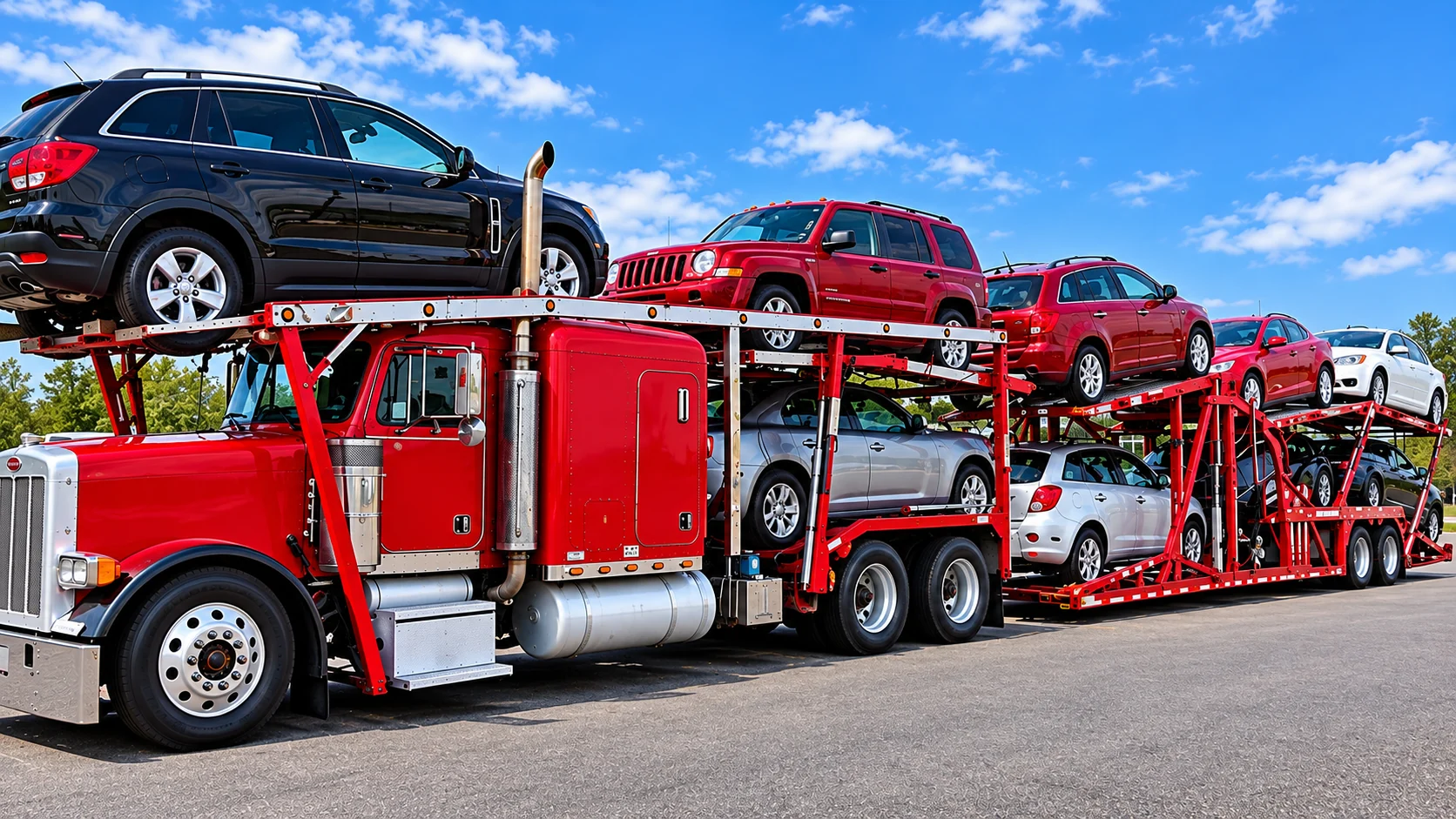
A practical guide to auction vehicle transport covering release documents, lot rules, non-running condition, forklifts, fees, keys and carrier access. The goal is to explain what matters operationally so customers can make better-informed decisions without turning a real shipment into a generic checklist.
Auction transport begins with release information
Buying the vehicle and transporting it are separate steps. Before dispatch, confirm the exact auction location, stock or lot information, VIN, release status and the documents or digital credentials required for pickup. A driver who arrives without the required release can lose hours or leave without the vehicle.
Describe the vehicle as it sits—not as it looked in the listing
Auction vehicles can have collision damage, missing parts, locked steering, flat tires, deployed airbags, broken suspension or no keys. Tell the broker whether the vehicle starts, rolls, steers and brakes. Photos are valuable because “non-running” can describe anything from a dead battery to a vehicle that cannot roll.
Forklift loading solves one problem and can create another
Many salvage auctions can use forklifts to place an inoperable vehicle onto a trailer. That does not automatically make the vehicle easy to deliver. The carrier still needs a safe plan to unload it at destination. A car that cannot roll may require equipment or assistance at both ends.
Know the auction’s pickup rules and hours
Lots may use appointments, transporter registration, gate passes, QR codes or specific pickup windows. Rules can change by facility. Confirm the current release procedure directly with the auction and provide the transporter what is required before the truck is dispatched.
Storage deadlines matter
Auction storage charges can begin or increase if a vehicle is not removed on time. Tell the broker the last free pickup date and any hard deadline. A storage deadline is different from a preferred pickup date and should be treated as a scheduling constraint.
Vehicle dimensions still matter
A damaged pickup, van, SUV or vehicle with altered suspension can occupy more trailer space than expected. Missing wheels or body parts that drag can also affect loading. Accurate dimensions and condition information help prevent a truck from arriving with equipment that cannot safely handle the vehicle.
Plan the destination before the truck leaves the auction
If the delivery address is residential, confirm that the vehicle can be unloaded there and moved after it comes off the trailer. A forklift at the auction does not follow the vehicle to your driveway.
Practical takeaway: Gold Coast Auto Transport LLC is an FMCSA-authorized property broker. Carrier availability, equipment, policies and live market conditions vary by shipment, so current details should be confirmed before dispatch.
Some auction yards can use forklifts to move non-running vehicles to a loading area, but availability and procedures vary by location. A forklift can help position a vehicle; it does not automatically make every damaged vehicle suitable for every trailer. The carrier still has to determine whether the unit can be loaded and secured without creating a hazard or damaging the equipment or vehicle.
Forklift assistance has limits
“Runs” is not enough information when arranging auction transportation. The useful questions are whether the vehicle starts, moves under its own power, steers, brakes, rolls freely, has keys and has collision damage that affects loading. Flat tires, locked wheels, missing suspension components or loose body parts can materially change the equipment needed. Photographs and auction condition information should be reviewed before dispatch whenever possible.
Condition descriptions need to be operational
Auction transport often fails before the truck reaches the vehicle because the release information is incomplete. The buyer should confirm the lot, stock or item information, VIN, buyer or release credentials, pickup authorization and any gate pass or QR-code requirement. The person arranging transport should also know whether the auction requires the carrier company to be registered in advance. A correct street address does not help if the driver cannot obtain the vehicle at the gate.
The gate release is as important as the address
Related guides: Non-running vehicles • Salvage and damaged vehicles • How carriers load vehicles
Continue learning: Return to the Gold Coast Knowledge Center →
Need a transport quote? A useful quote starts with the actual route, vehicle, condition and timing. Request a quote.